展览频道
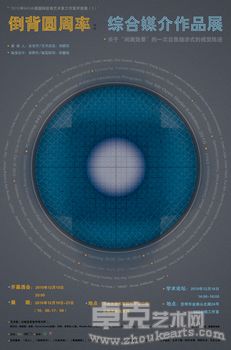
倒背圆周率:综合媒介作品展
——关于“间离效果”的一次自我指涉式的视觉陈述
开幕酒会:2010年12月18日,20:00
展期:2010年12月19日-23日 (10:00-17:00)
地点:云南大学东陆园科学馆二楼,云南大学美术馆
学术论坛:2010年12月18日,14:00-16:00
地点:昆明市金鼎山北路24号,943小组工作室
艺术家(以姓名发音字母为序):
陈玲洁,陈晓丽,崔秦,Karrie Hovey(美国),刘双,罗耸耸+江晨,Mueller Raoul(瑞士) ,饶斯琪,Sabrina Muzi(意大利),施婧,严琳骁,兰艳+“119”小组,俞洋+“活跃症”小组,4/4工作室,蠢蠢欲动族
主办:943小组, Loft·金鼎1919,云南大学美术馆
协办:管郁达工作室
策展人:宣宏宇
艺术总监:刘丽芬
海报设计:郭贯宇
展览助理:张雪梅
支持媒体:《向上》,《旅游周刊》,《白金风尚》,《春城晚报》,《都市时报》,《生活新报》,《云南信息报》,《昆明日报》,gokunming,艺术国际,艺术个案,99艺术网,阿特艺术,艺术上海
如需要更多资料,请联系943studiokm@gmail.com
www.943studio.cn
Kunming 943 Studio International Artist-in-residence Program
The 5th Open Studio Exhibition 2010
Counter-reciting Circumference Ratio mixed media art exhibition
- A Self-reference Visual Presentation about Defamiliarization Effect
Exhibition Opening: 20:00, Dec 18, 2010
Duration: Dec 19-23, 2010(10am-17pm)
Address: Yunnan University Art Museum, 2nd floor of Science Hall, Yunnan University
Academic Forum: 14:00-16:00, Dec 18, 2010
Address: 943 Studio, Jinding shan north road no.24, Kunming
Artists (in alphabetical order the names pronunciation)
Chen Linjie, Chen Xiaoli, Cui Qin, Karrie Hovey(USA), Liu Shuang, Luo Songsong + Jiang Chen, Mueller Raoul(Switzerland), Rao Siqi, Sabrina Muzi(Italy), Shi Jin, Yan Linxiao, Lan Yan + “119” Group, Yu Yang + “ADHD” Group, 4/4Studio, “ddwf”
Host by: 943 Studio, Loft·Jinding1919, Yunnan University Art Museum
Co-host by: Guan Yuda Studio
Curator: Xuan Hongyu
Art Director: Liu Lifen
Poster design: Guo Guanyu
Assistant: Zhang Xuemei
Media Support: “Up”, “Travel Weekly”, “POSH”, “Spring City Evening News”, “City Times”, “Live Daily News”, “Yunnan News”, “Kunming News”, gokunming, Artintern, art-gean, 99ys, ccartd, art Shanghai
For more information, please contact 943studiokm@gmail.com
www.943studio.cn
Counter-reciting Circumference Ratio
By Xuan Hongyu
“……five, one, four, one, three----OK, I am done!” a languid old man whooped.
“You look exhausted. What are you doing?”
“I’m counter-reciting circumference ratio.”
This is a ridiculous dialogue described by Roy Sorensen in the beginning of his “A Brief History of the Paradox”. It might be regarded as a joke, but it is a ponderous joke. If we reflect a little on the history of human civilization, we will easily find that this self-paradox which cannot be self-justified is contained in almost all of the decisions and actions that we are proud of. Furthermore, what is so desperate is that this self-reflection can’t be exempt from the destiny of the failure of self-consistence. Nonetheless, perhaps we don’t need to be too pessimistic, since our vivid daily lives have never been denied by these self-paradoxes. On the contrary, it is through all sorts of examinations of self-reference that the self-paradox is marked with a specific historical significance. Therefore, the value of self-reflection is nothing about rectification, but the experience itself. The self-reflection can get rid of logical trouble via artistic creation and reestablish the everydayness of our minds in inter-individual participation.
Based on the characteristic of its anomaly, artistic words have been playing the role of rebutting normal thought/word formulation. However it had not been widely realized before the Dadaism has opened it up to the public in the earnest practical way which they advocated. Soon after, through the official discussion about the estrangement effect (Verfremdungseffekt) first proposed by Bertolt Brecht in 1936, estrangement (Verfremdung) method in artistic creation started to be widely accepted not only as a rhetorical skill that argues against stereotypes, but also an effective means to draw the audience’s attention. Nevertheless, in the same way as the propagation of other platitudes, when this estrangement is no longer based on the language experience of the individual but is an expectable spreading strategy, it is no longer about the self-reflection of some concepts. Unfortunately, no matter how clearly we are aware of it, we can’t attempt to establish a set of universal criteria to distinguish the authenticity and the falsehood of an artistic work, because these criteria will eventually become a new linguistic supremacy, the same as the object which was opposed by the criteria originally. The purpose that the people returned to the beginning of estrangement was to set the individual experience free from suppression of so-called axioms, to freely express their will as unique individuals, instead of like the “ordinary people”.
In the age of the mushrooming of avant-garde art, frame-free art always plays a vitally important role from the subversion of conventional aesthetics (e.g. Dadaism) in the beginning, to mutual penetration with daily life (e.g. Pop Art) afterward. Subsequently, when the slogans such as “Everything is Artistic Work!” and “Everyone is Artist” are no longer appealing, an artistic work presented as an installation or a behavior is no longer appreciated as a specific art event, but a sort of fashion marked with a label of avant-garde. In China, this change was rapidly completed with a utopian passion in the 1980s. Although this accomplishment of course has its historical significance, the subsequent construction process of a series of nationalized art language systems was once again an Alexandrian recurrence. Those successful contemporary artists’ imitation of art outcome but not art course only repeated philistinism, and will never produce the avant-garde culture (Art and Culture by Clement Greenberg). In such a fruitful practice of the estrangement effect, what we have lost is attention to true individual existence.
Of course, the same as any historical description, the account of successful art history is nowhere near equivalent to the history. What is important is that we are conscious enough to avoid being marginalized on the outside of this gazing situation. As one of the important sources of contemporary art, Yunnan provided not only the inspiration derived from its natural landscape to the artists, but also a relaxed and lazy life style, which cannot be regarded as a persistent advantage. This life style just helped those artists who started their art career since the 1990s to develop a distinctive quality and temperament. Their involuntary achievement myths only belong to themselves. There is no lack of their followers among the new generation of artists during the past ten years. But we shall not neglect another group of young artists who have still been making different attempts, the same as those who were desensitized to fashion trends but succeeded in their art careers. I say they are different not only because of the medium of their creation or the means of their activity organizing is different from frame-based painting work which brought great opportunity to Yunnan art, but even more to indicate their distinct awareness about individual artistic production. However, I have no intention of declaring any “improvement” when I’m talking about them here in particular because their activities have been nothing about the concepts of “advanced” or “correct” from the beginning. Their art activities are merely based on their individual daily life styles. From “Jianghu” to 943 Studio, all of their art activities have nothing to do with the rise and fall of Kunming Loft, let alone the waving of the art market. These activities only care about the participant’s happiness in being involved. They often spark the interest of the public, but do not seem to need applause or to be encouraged……
“Counter-reciting Circumference Ratio” is just the continuation of this life style, but in the mean time, it is not a relay march. It is much more like a comma—pauses for a moment and looks back but not in a way of summing-up or summary. It is not for revision, but for self-examination towards more open communication. It is somewhat untimely to talk about the “estrangement effect” in a time which is filled up with different publicity stunts. However, as we can’t simply laugh at the dialogue about counter-reciting circumference ratio, we do have a number of issues to seriously consider about this exhibition which may be called “The New Media”.
Obviously, there are quite number of artistic works in this exhibition with the trend of defamiliarization, especially those works created by foreign artists. They are attempting to build a circumstance in between of strangeness and familiarity. They attempt to either explain some metaphysical ideas through a kind of experiential sensory perception atmosphere or challenge our sensory custom just by transformation of form; undoubtedly, they indeed disregard our daily sensory experience to some extent. In order to really approach their art works, we perhaps have to give up our preconceived thinking pattern about these art works—that is, don’t connect any individual art work with the concept such as “pioneer” or “new media” because it is an installation or a video, but show our respect to each individual art work because it exists only as itself. Hence we can offload different shackles which have been put on our minds by our previous experiences and make the liberty of appreciation possible. Of course, it doesn’t mean that we then find a correct way to “appreciate art”, nor does it mean that by this proper way we will not misunderstand the “perfect essence” of an art work. This kind of attempt will not eliminate problems from the audience; on the contrary, it will produce problems. Or it is also possible that the art work itself is a problem. If “estrangement effect” doesn’t merely exist as a factor of formalism, it must be related to the problem. It is just because the artist is someone with some problems, the form of their art works can become some kind of thought. So, any trace of defamiliarization presented by the art works of this “Counter-reciting Circumference Ratio” exhibition will definitely be consciously observed. And in this observation, “estrangement effect” will slide into an infinite countermarch of self-reference. The result will certainly not be any answer to the above problems, but the confusion caused by these problems. Maybe this is the initial demand of “estrangement effect” which has been generated from the beginning of art context!
So far, all expositions about “Counter-reciting Circumference Ratio” exhibition, and especially the “estrangement effect” brought by the title of this exhibition are leading us into the context of self-reference. It may not be good, but absolutely not all bad. Anyway, let’s just enjoy these art works……
倒背圆周率
“……5,1,4,1,3——背完了”,一个疲倦的老头大叫道。
“您看上去精疲力竭,您在做什么?”
“我在倒背圆周率。”
索伦森(Roy Sorensen)在《悖率简史》的开篇处描述了这样一段荒诞的对话。这可以被当作一个玩笑,但却是一个沉重的玩笑!如果对人类的文明史稍作检省,便不难发现几乎所有我们可以引以为荣的意志与行动都包含着无法自圆其说的自我悖反,而尤其令人绝望的是,就连检省本身亦难逃不自洽的宿命。不过,我们或许不必太过悲观,毕竟真切的日常生活从来就不曾因此而被一笔勾销,相反,正是在种种敢于面对自我指涉的审视中此在才获得了其历史性的具体意义。因此,检省的价值并不在于矫正,而在于经验过程自身,经由艺术,它得以摆脱逻辑的困顿,在个体间的分享中重建思想的日常性。
基于“破格”特性,艺术语言向来都扮演着反驳思维(语言)定式的角色,只不过在“达达”现象身体力行地将之公诸于众之前,它尚未被人们普遍地觉察到。 不久之后,经由布莱希特(Bertolt Brecht)1936年首次对间离效果(Verfremdungseffekt)提出的正式讨论,艺术中的陌生化手法不仅作为一种挑战成见的修辞技巧被广泛接受,而且也成为了一种行之有效地吸引观众眼球的手段。然而,和所有陈词滥调的孳生一样,当陌生化不再基于创作个体的语言经验而是作为一种可被预期的传播策略时,它便不再与观念的反思有关。不幸的是,无论怎样清醒地认识到这一点,我们都不能试图去建立一个普适性的标准以区分艺术作品的“真实”与“虚假”,因为这样的标准终究会和它原本所反对的东西一样成为新的话语霸权,而在人们自觉到间离效果的开端处却正是要让那些为“公理”所压制的个体经验解脱出来,以自身而不是按“常人”的意志去自由表述。
在前卫艺术风起云涌的时代,从一开始对传统美学的颠覆(如达达)到后来与日常生活的互渗(如波普),非架上艺术始终扮演了至关重要的角色。然而,当“一切都是艺术品”和“人人都是艺术家的口号”不再显得骇人听闻时,某个以装置或者行为呈现出现来的作品也就不再被作为具体的艺术事件来考量,而是被化约为贴着“前卫”标签的时尚品种。在中国,这样的蜕变过程在1980年代的乌托邦激情中被瞬间完成了,尽管这一完成不乏其历史性的意义,但随后的一系列所谓民族化艺术语言体系的构建进程却是又一次“亚历山大主义”式的轮回,成功的“当代艺术们”对艺术的结果而非艺术的过程的模仿只会表演着庸俗,而不会创造出前卫文化(格林伯格Clement Greenberg:《艺术与文化》)。在间离效果的卓有成效的实践中,我们失去的是对个体真切存在的关照。
当然,与任何的历史书写一样,成功艺术史的书写远不能等同于历史本身,重要的是,我们是否有足够的自觉以免在其凝视中成为边缘化的他者。作为中国当代艺术的重要策源地之一,云南给予艺术家的不仅是自然风貌带来的灵感,而更是闲适慵懒的生活气息。这不能说是什么恒久的优势,而只不过恰好让那些在1990年代出发的艺术家们具备了当时与众不同的气质,他们在不自觉中所成就的神话终究只属于他们自己。十年来,新一代的艺术家中不乏前辈们的追随者,但应该注意到的是,还有一些和当年的成功者一样对潮流迟钝的年轻人在做着一些与成功样式完全不同的尝试。说他们不同不仅仅是指他们进行创作的媒介或者组织活动的方式都异于曾经给云南艺术给来幸运的架上绘画,更是指他们对个体艺术劳作的另一种意识。不过,今天特要别地谈论他们却无意去宣称某种“进步”,因为他们的行动从一开始就取消了诸如“先进”、“正确”之类的概念,他们的艺术活动只不过是个体日常生活的一种方式。从“江湖”到943小组的系列活动,与创库的兴衰无关,更与艺术市场的起落无关,它们只和参与其间的快乐有关,不断地点燃喧嚣,却又似乎总是无须喝彩……
“倒背圆周率”正是这种生活方式的继续,但又不是那种接力式的前行,它更像是一个逗号,稍作停留,以一种并非总结或者小结的方式回首,不为修正,而是为着更敞开的交流去打量自身。在今天这样一个噱头蜂涌的传播时代谈论“间离效果”多少有点让人哑然失笑,但正如那段关于倒背圆周率的对话让人不能一笑了之一样,对于这样一个可以冠之以“新媒体”之名的展览,确实还有一些亟待思索的问题。
显然,在这个展览上有为数不少的作品流露着陌生化的倾向,尤其是几位外国艺术家,他们都在试图营造某种游离于陌生与熟悉间的情境,无论他们是想通过这样一种体验性的感官氛围向我们阐释某种形而上的观念还是仅仅借助形式的转换来挑衅我们的感觉习惯,毫无疑问的是它们确实在一定程度上抽离了我们的日常感觉经验。为了真正地接近它们,我们可能必须去除那种类型化了的思考前提,即不因为它们是装置或是影像就同“先锋”或者“新媒体”套上关系,而是给予每一件作品个体意义上的尊重:它仅仅作为它自身存在。由此,也就卸下了任何先验标准加诸我们的种种枷锁,观看的自由才成为可能。当然,这不意味着我们获得了某种通达“艺术欣赏”的正确途径,更不意味着如此“正确地”观看才能避免误会作品的“完美本质”。恰恰相反,这样的尝试不会让观看变的没有问题,倒是会让问题生发出来。或者说作品本身就是问题。“间离效果”如果不是仅仅作为一种形式主义的因素而存在的话,那它必然与问题有关,正是因为艺术家是“有问题的人”,作品的形式本身才成为思想。由此,“倒背圆周率”所呈现的作品中的任何陌生化痕迹都将被有意识地注视,在这样的注视中,“间离效果”将陷入自我指涉的无穷倒退之中,其结果当然也就不会是问题的答案,而是问题带给我们的惶惑,这或许正是“间离效果”产生于艺术语言发端处的最初诉求吧!
至此,所有关于“倒背圆周率”展览的阐释,尤其是展览标题本身所带来的“间离效果”也正将自身引入自我指涉的境遇之中。这大概算不上是什么好事,但也绝非坏事。总之,还是看作品吧……
宣宏宇
2010年12月5日于红河打铁寨
上一篇展览:木--鲁婷婷影像装置作品展
下一篇展览:李国民工笔花鸟画展
E_mail:zhkarts@vip.163.com 客服电话:18156032908 18155173028 18956011098
版权所有:卓克艺术网 Copyright 2005-2018 zhuoke.cn, All Rights Reserved.
合肥美网文化传播有限公司ICP皖ICP备09018606号-1 皖公网安备 34010402700602号
企业法人营业执照互联网域名注册证书安徽省通信行业暨互联网协会会员单位中国互联网举报中心
客服电话:18156032908 18155173028 18956011098
©2005-2018 zhuoke.cn ICP皖ICP备09018606号-1