展览频道
策展人:江 铭
参展艺术家:(按中文姓氏笔画排序)
于瀛、王觉、苏梓寒、刘伟、刘朝辉、孙黎、阿波、张渡、张学海、张海鹰、张郁葱、张建俊、郎小杞、周金华、贺敏、赵丽军、栗子、徐春丽、郭培俊、董轩嘉
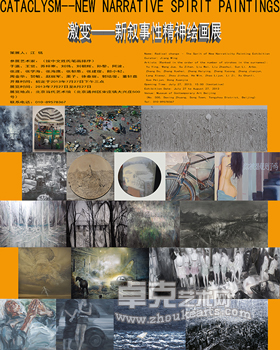
开幕时间:初定于2013年7月27日下午三点
展览时间:2013年7月27日至8月27日
展览地点:北京当代艺术馆(北京通州区宋庄镇大兴庄500号)
联系电话:010-89578367
网址:www.bjmoca.com
展览前言:
激 变——新叙事性精神绘画展展览说明
第一次有关新叙事性的展览是今年4月28日在北京白庙艺兵空间的那一次。我组织那次展览的目的在于批评目前中国当代艺术的架上绘画试验中过多的抽象化倾向,这种抽象化意味着一种趣味化、民俗化、装饰化的倾向。目前中国处于一个现实问题远远重于艺术语言问题的过渡历史中,重提作品的叙事性、象征性以及隐喻性有着重要现实人文价值。那些纯抽象化的作品、由于过度强调风格化、语言化在现实的批判性上明显地表现得苍白无力。已经沦为中产阶级情趣的装饰物,在被贩卖的交易中成为获取商业利益的筹码。其作品自诩的语言价值不过是其逃避现实矛盾以及问题的借口。
回到叙述性以及象征性,不仅针对中国现阶段的文化艺术发展具有象征性意义,而且对于当下具有现实意义。作品可以有多元化的解读与阐释,但仍需能够被指认出一些与我们现实人文相关联的内容,才能够说明其与现实性的关系。特别是在中国这样一个现实性问题远远大于形式审美的当下。
我在这里所强调的叙事性,不仅仅是指作品的语言,也不是画面所描述的场景,我所指的现实性实际上是一种现实主义的立场。这种现实主义是立足于对现实的反思、批评与质疑的一种人文态度。只有这些东西在一幅作品中呈现出来,才是我所选择的对象。而这种现实性的态度必须对应当下的社会问题、人们普遍性的生存感受、精神状态、伦理状况等等,才能够准确地对应其文化的判断。这是特别应该关注的,也是我们目前很多走向语言、形式实验的艺术家的误区。
中国美术的历史一直有着强大的叙事性传统,自先秦时期至20世纪80年代之前一直如此。这种叙事性不仅有着自身的逻辑系统,而且形成了自己特殊的审美需求。19世纪之前的传统力量在自身的文化体系中延续性地演变。形成了以文人绘画为审美的叙事性传统,在视觉上介乎于:似象非象之间的模糊空间感受。从人物、山水到花鸟都以这种似与非似最终作为审美的最高境界。而其中的叙事性隐藏在模糊的意境之中,其指向往往透视出作者的个人情趣、品位以及理想。而十九世纪之后,由于民族战争的影响以及西方外来思想的介入,中国文化审美的趋向日益具有了中和的特质。一方面有传统的脉络,一方面吸取了西方古典主义的语言。而新中国建立之后又形成了更为强大的传统:毛泽东的文艺路线,这种文艺的审美仍然建立在以叙事性为线索的形式样式上,在作品的指向性上则是树立新形象,其内容反映的都是为“新阶级”的专政服务。到20世纪80年代中期之后,文艺的方向重新转向,西方文化艺术的大量传播,使得此前的两大体系,即传统文化体系以及毛泽东文艺体系都全面受到冲击。而西方文艺系统的多元化使得中国的文艺系统的改变过于草率与匆忙。在短短的二、三十年的时间里面,中国的艺术家将西方现代、后现代艺术二百年的历史中所演化的各类形式都“山寨化”了,并且无所不用其极!特别是20世纪90年代以来,行为、装置、影像、抽象、新表现等等泛滥。而这种改变仍然以前两大传统作为其素材。这便形成了今日中国当代艺术的边缘体系与新的语境传统。
世界当代艺术系统来源于欧洲的叙事性绘画的庞大系统,从文艺复兴以来,一直到抽象主义出现,叙事性一直是欧洲美术发展的主流。无论是宗教绘画、巴洛克肖像画、新古典主义、浪漫主义、法国写实派、印象派、后期印象派、立体派等等,潮流一个接着一个,但是其作品内容上的叙事性主流始终没有改变,其作品的形式变化仍然是为作品的隐喻型、象征性、所指性所规范。形而上若没有形而下作为其支撑,则必然成为无本之木,无根之草,变成工艺与摆设。再精致完美的武器,总是使用它用来作战的。若只是制造了强大的武器放进玻璃橱柜,则不需要去研究了,只需制造一个假的外壳就能达到。可是当现实的残酷性降临时,假的武器能起什么作用呢?
艺术是时代人文、历史的反应,这种反应不是仅仅指记录,而是指它自身所具有的思想性的功能,在现实的敲击下,本能作出的反弹,是心灵对现实的不完满性作出的对抗。正如福柯所说:“艺术作品与疯癫共同诞生与变成现实的时刻,也就是世界开始发现自己受到那个艺术作品的指责,并对那个作品的性质富有责任的时候。”①一件艺术作品它所呈现出来若没有对世界产生任何的指责,而不能够使得世界在它的面前感觉到自身的不完善与欠缺,那么这样的作品有什么意义呢?世界的美好是本来就设定好了的,大自然的平衡本来就是宇宙的法则。而人的世界是破坏这种平衡与和谐的主谋,艺术作品首先应该是针对人的现实性的。现实主义的批判意义正在于此,叙事性作品的现实性也正在于此。
新叙事性系列展览选择一系列与现实主义倾向有关的作品,做一个系列的活动,意在重提喻意性、现实性、当下性,反对形式主义、抽象之风、符号性绘画。这是我所策划这一个主题的宗旨与目的。
注①:引自米歇尔•福柯《疯癫与文明》
作品阐述:
于瀛的作品在观念化的场景中营造了寓言性的图像,而我们感受到的则是不可预测和没有希望的的未来。
王觉的作品在现实与超验的世界建筑了桥梁,通过这座神秘的桥梁我们看到只有使人不断疼痛的东西才不会被忘记。每当人类在历史上留下印记的时候,就会发生流血、酷刑和牺牲。
苏梓寒的作品通过破坏性的唯美的画面,表达了当代社会无处不在的对人的权利与尊严的伤害,这种伤害是强权的表征。
刘伟的作品通过人物形象与自然或人造景观的超现实的融合,暗喻了人类发展模式与自然法则的对抗,这种对抗性暴露了人类的野蛮与疯狂。
刘朝辉的作品像一株小草一样以他最简单最单调最软弱的语言方式在图像中重新将城市与工业“文明”从精神上给排除掉了。
孙黎的作品将观念隐藏于景观与环境之中,在一个对抗变得无效的社会中,只有隐喻是最好的选择。
阿波的作品通过对自然界阴云密布场景的描述,向我们展现出宇宙超验的能量,以及人在这种能量场中无足轻重的位置。这是对当下人类疯狂欲望的巨大讽刺。
张渡的作品通过白描的方法描述了当下社会充满欲望、色情、堕落、疯狂的景象,这种景象是没有希望的即时性的路向,它所造就的是神经症的人格和变态的世界。
张学海的作品是当代社会没有希望与出路的发展模式的隐喻性描述,在被社会所描述的充满希望的新未来与新秩序的背面正是张学海的世界,这或许才是真实的东西。
张海鹰的作品当下现实场景的表现性的叙述,讽喻性地批判了当下权力制度将责任单向度地归于受害者的无耻与冷酷。在权力的价值系统中,失意者、失败者所选择的生存方式所带来的丢脸的危险应该由自己完全承担。
张郁葱的作品似乎通过人茫然于混乱之中的穿行,是我们仿佛回忆起那些令我们忧心忡忡的梦和处境。那是一些短暂易逝、昙花一现的爱、愤怒或者怀疑,在这样的梦中我们焦虑而不自知。
张建俊的作品是对于中国社会日益腐败状况的隐寓性阐述。如今的中国是对于奢侈浪费、声色犬马的上行下效,其最后结局只有一个,那就是革命还要吃掉自己的孩子。
郎小杞的那些具有场景的作品是对某些报纸新闻的重新叙述。郎小杞用她特有的表现手法,使得整个画面传达出某种紧张、焦虑、严肃的感受,并深刻折射出了今日现实的种种问题。
周金华的画面以一种全景俯视的角度展现了当下生活的万花筒,在错乱、热闹的场景中是人们焦虑的生活、病态的竞争。在中国的历史上还没有一个时代像今天一样对人的精神造成如此大的障碍,导致国人如此深刻的异化与畸变。
贺敏的作品营造了诡异神秘的场景,这种场景将现实的不满、梦中的焦虑、情感的隔离、内心的孤独等等融合成为一种限制与压抑。个人愿望与社会的要求之间的冲突并不必然导致神经症,但是却会带来实际的痛苦。
赵丽军的作品明确的观念性表达,直接指向了社会对人的伤害以及个人在社会规范之中无能为力的变异与退缩。
栗子的作品是人类对爱病态的需要无法达成而又必须自我肯定的心里焦虑。在现代社会光鲜的生活中,人的内在的自我或可能却是痛苦、厌烦、绝望的,她们选择微信或围脖的方式为改变现状鼓掌叫好。
徐春丽的作品通过表现性的描述,借用父亲的形象揭示了生命等待时间的失败与无奈。并以此隐喻当下社会老人政治的无望与绝望。在这样的历史中是我们几代人都成为了苟且偷生的懦夫。
郭培俊的《夜行日记》运用表现主义的手法描述了傍晚出入于特殊娱乐场所的“小姐”们的生活状态。我们同生存在一片国土上,当她们出卖自我和尊严的时候,我们是否也应该扪心自问:我在出卖什么?
董轩嘉的作品是童话与寓言的媾和。每当人们对生命厌倦、对人生冷漠、对残酷不再感到耻辱的时候,历史便进入了最恶毒的时代。这样的时代,灵魂也会感到无法证明的痛苦。
NAME: RADICAL CHANGE – THE SPRIT OF NEW NARRATIVITY PAINTING EXHIBITION
Curator: Jiang Ming
Artists (Ranked in the order of the number of strokes in the surnames):
Yu Ying, Wang Jue, Su Zihan, Liu Wei, Liu Zhaohui, Sun Li, Arbo,
Zhang Du, Zhang Xuehai, Zhang Haiying, Zhang Yucong, Zhang Jianjun,
Lang Xiaoqi, Zhou Jinhua, He Min, Zhao Lijun, Li Zi, Xu Chunli,
Guo Peijun, Dong Xuanjia
Opening Time: July 27, 2013, 15:00 (tentative)
Exhibition Date: July 27 to August 27, 2013
Venue: Museum of Contemporary Art Beijing (No. 500, Daxing Zhuang, Song Town, Tongzhou District, Beijing)
Tel: 010-89578367
Elaborating of this Exhibition:
RADICAL CHANGE–ELABORATING OF THE SPRIT OF NEW NARRATIVITY PAINTING EXHIBITION
Written by Jiang Ming
The first show relating to the new narrativity was the Exhibition at Beijing Baimiao Art Space arts on April 28, 2013. I organized that exhibition for no other reason than that there was an overwhelming abstraction tendency in Chinese contemporary art practices, which meant a tendency of fun, custom and decoration. For nowadays China is under a transforming process, in which the realistic problem is bigger than the formal aesthetics, back to narrativity, symbolization, and metaphor is of great value. Those pure abstract works, due to their excessive emphasis on the style and language, they are obvious pale in criticizing the reality, which will descend to the ornaments with middle class and petty bourgeoisie sentiments in commercial hype and be the leverage to obtain commercial interests in the sold trick. The so called language value in their works is nothing but their excuse to escape from the realistic contradictions and problems.
Back to narrativity and symbolization, it is important not only for the symbolic meaning of the Chinese realistic problems, but also for the aesthetic demand which can be understood by Chinese society. Even if the works can be understood and expressed in many ways, some contents related to our realistic humanities still needed to be pointed out, to show their relations to reality, especially for nowadays China in which the realistic problem is bigger than the formal aesthetics.
The narrativity I emphasizes does not only refer to the works’ language, nor the scenes described by pictures. In fact, the reality I referred is a realistic position that is a humanistic attitude based on reflection, criticizing and questioning of reality. Only the aforementioned things are displayed in the work, shall be my selected objects. And this kind of realistic attitude must correspond to the current social problems, the universal survival experiences, mental states, moral states and so on, so as to accurately judge the corresponding culture. This is where especially pay attention to should and the erroneous zone of many language or form experiment artists.
From pre-Qin period to 1980s, there was a strong narrative tradition in Chinese art history all the time. This narrativity not only has its own logical system, but also has formed its own specialized aesthetic demands. This pre-19th century traditional strength continually evolved in its own cultural system and finally formed the narrative tradition in which aesthetic was based on literati’s paintings. Visually, it showed the fuzzy space feeling that was between like and unlike, which was the highest realm of aesthetic of paintings related to figures, landscapes, birds and flowers. As the narrativity was hidden behind this fuzzy feeling, you could tell the temperament and interest, taste, and ideal out of the painter’s paintings. However, after 19th century, due to the influence of national war and the influx of western thoughts, the tendency of Chinese cultural aesthetic began to have a neutral characteristic increasingly, which was both traditional and western classicism. With the foundation of PRC, there sprang up a more powerful tradition, ie., Mao Zedong's literary route, which was still based on narrativity in form. It set up new directivity of works which worked for the dictatorship of the “New Class”. After mid-1980s, there came the direction of the literature and art turn once again. The widely spread of western literatures and arts fully impacted these two former systems, traditional culture system and Mao Zedong's literary system. The diversity of western literature and art system resulted in a hasty and hastily change in Chinese literary and art system. In just twenty or thirty years, Chinese artists did all they can to "shanzhai" all forms of western modern and post-modern art, which are formed with two-hundred-year’s evolution! Particularly, it reflected in the overflow expression forms of behavior, device, image, abstract, new performance, and so on since 1990s. This change used these two traditions as its materials and formed the fringe system and new context of Chinese contemporary art.
The system of contemporary art derived from the huge system of Europe's narrative paintings.
From the Renaissance to the occurrence of abstractionism, narrativity has always been the mainstream of European art development. Regardless of religious paintings, portraits of baroque, neoclassicism, romanticism, French realism, impressionist and post-impressionist, cubism and so on, new school emerged one after another; however, the mainstream of narrativity in the work content has not changed. The form changes in their works are still work for the metaphor, symbolism and reflection of these works. Without physical supports, Metaphysic will become the rootless tree or grass, or the technology and decoration. No matter how delicate and perfect a weapon is, it always used for combating. If we just need a powerful weapon in the glass closet, we only need to create a fake shell. But when the war begins, what role does the fake weapon play?
Art is the reaction of humanities and history of the era. The reaction is not only refers to record, but the function of ideological content existed in itself, which is the instinctive rebound to the reality and the inner confrontation to the unfulfilled reality. As Foucault said, “When the art and madness born together and become a reality, the world began to find itself accused by an art work and should be liable for the nature of the work”① If an art work has not presented any criticism to the world and could not show any faultiness or lacks to the world, what does this work what for? The world is designed to be perfect. The balance of nature is the law of the universe. Human world is the ringleader of the destruction of the balance and harmony. Art works first should contrapose the reality. That’s the critical sense of realism. That’s the realism of the narrative works.
I chose a series of works relating to realism tendency in this new narrativity exhibition, to make a series of activities that intend to take metaphor, reality and present up and be against to formalism, abstract and symbolic paintings. This the purpose and aim I plan this exhibition.
①Quoted from Michel Foucault’s Madness and Civilization.
Elaborating of the Works:
Yu Ying’s work portrays allegoric images in conceptualization scenes, which makes us feel the unpredictable and hopeless future.
Wang Jue’s work builds a bridge between the reality and the transcendent world. Through the mysterious bridge we can see that only the things causing constant pain shall not be forgotten. Whenever people left a mark in history, bleeding torture, and sacrifice occurred.
By using the destructive aesthetic images, Su Zihan’s work expresses the ubiquitous damage to human rights and dignity in contemporary society. The damage is the sign of power.
By using surreal fusion of characters and natural or man-made landscape, Liu Wei's work implies the confrontation between the human development pattern and the laws of nature, which exposes human’s brutal and crazy.
Like an individual plant grass, Liu Zhaohui’s work mentally excludes the city and industrial "civilization" out of images in his most simple, boring and weak language.
In Sun Li’s work, the idea is hidden in the landscape and environment. In a society that confrontation becomes invalid, only the metaphor is the best choice.
Arbo’s work describes the nature scene that the sky is covered with dark clouds, which shows us the transcendent energy of the universe as well as the people’s unimportant position in this field. It is the great irony to current human crazy desire.
By using the line drawing, Zhang Du’s describes the scene that current society is full of desire, pornography, depravity, degeneration and crazy, which is a hopeless and instantaneous direction and makes the personality of neurosis and the world with abnormal conditions.
Zhang Xuehai’s work is a metaphorical description of the contemporary society’s development pattern which has no hope or outlet. Zhang Xuehai’s world is the contrary of the so described world that is full of hope and the new orders in the new future, which perhaps is the real thing.
Zhang Haiying’s work is the expressive description of current real scene, which allegorically critiques the ignominy and pitilessness of the current power system in which only the victim takes all the responsibilities, that is, in the value system of power, the frustrated and losers shall be completely liable for the embarrassing danger caused by their survival mode.
With describing the situation that people vacantly cross in the chaos, Zhang Yucong’s work makes us remember those worried dreams and situations, which are fleeting love, anger, or suspect. In those dreams, we feel anxiety and don't even know it.
Zhang Jianjun’s work is a metaphorical elaboration of the increasingly corruption situation in Chinese society. Today’s China is the emulation of extravagance and waste, sensual pleasures, whose final outcome is only one, that is revolution and eating their own children.
The scene in Lang Xiaoqi’s work is the new narrative of some newspaper’s news. With her unique technique of expression, the picture conveys certain tension, anxiety and serious feelings and profoundly reflects the problems of current reality.
By using the angle of overlooking panoramic view, Zhou Jinhua’s work shows the kaleidoscope of today’s life. The anxiety of life and morbid competition is hidden in those disorder and hilarious scenes. In Chinese history, there was no era like today that caused such big obstacle to human spirit and resulted in deep alienation and distortion of Chinese People.
He Min’s work creates a strange and mysterious scene, in which the dissatisfaction of the reality, anxiety of dreams, isolation of feelings and inner loneliness mix together and become a restrictions and oppression. A conflict between personal desire and social requirements does not necessarily lead to fatigue, but will bring the actual pain.
Zhao Lijun’s work has a clear conceptual expression, which directly points to the individual damages caused by the social and individuals’ helpless mutation and retreat when facing with the social norms.
Li Zi’s work reflects the failure of people’s pathological need for love and the inner anxiety for self-affirmation. In modern flashy lifestyle, the person's inner self may be painful, bored and despaired. They turn to Wechat or Weibo so as to applaud the change of the status.
By using the expressive description, Xu Chunli’s work takes father's image to reveal the failure and frustration of life-waiting, which is the metaphor of current social gerontocracy’s hopelessness and despair. In such a history, generations of us become the cowards who live just for the sake of remaining alive.
Guo Peijun’s A Nocturnal Record uses the skill of expressionism and describes the living state of those prostitutes who go to the special places of entertainment in the evening. We live in the same country, when they sell their bodies and dignities, should we also ask ourselves: what I sell?
Dong Xuanjia’s work is the fusion of fairy tales and fables. Whenever people feel tired of the life, indifferent to life, and no longer feel shame for the cruel, the history has entered into the most vicious era. Being in this time, the soul will also feel unprovable pain.
策展人简历
王宝明,笔名江铭
1969年生于河北秦皇岛,祖籍湖北天门。1996年毕业于河北师范大学美术教育系。独立批评家、策展人。
独立策展活动
《激变——新叙事性精神绘画展》2013,北京当代艺术馆
《回到叙事性》2013年,北京白庙艺兵空间
《脉象——首届秦皇岛文献展》2012年,秦皇岛当代艺术馆
《黑白现实主义文献展第二回》2011年,北京当代艺术馆
《真实的假像——五人图像作品展》2010年,北京798红鼎艺术中心
《中国病人展》2010年,北京798红鼎艺术中心
《灵魂的需要——当代绘画新精神艺术展》2010年,北京798艺术资料库
《艺术为人民——第一届中国社区艺术巡回展》2009年 中国大陆
《转折点——新现实表现绘画展》2008年11月,北京成乐轩画廊
《故事李路明——李路明个展》2008年10月,新加坡好藏之美术馆
《多维视角——中国当代艺术11人展》2008年,北京一号地你画廊
《存在的尺度——何云昌个展》2008年印尼国家美术馆(雅加达)
《6.5维——史晶个展》 2007年印尼雅加达华艺莎艺术中心
《阐释的需要——十人影像作品展》 2007年 北京雍和美术馆
《黑白现实主义文献展》2007年7月8日北京大山子环铁时代ART美术馆
《消失的家园——卢昊个展》2007年5月15日印尼雅加达华艺莎艺术中心
《黑白立场展第一回》 2007年3月25日,北京大山子环铁将府文化艺术区
《内在的表达——当代绘画新精神艺术展》 2007年3月4日 北京皇城艺术馆
《黑白——新趋向展》2006年8月 主办:北京皇城艺术馆
《铂金影像》展 2006年4月 北京大山子798艺术区
《粉妆——母军个展》2006年4月 北京大山子艺术区
个人专著
《中国后现代艺术》,30万字,繁体中文版,台湾飞鸿文化出版,公开发行,2006年9月。
《后波普浪潮——对中国特殊消费主义的现象学研究》,10万字,长城文化出版公司出版,香港,2008年5月。
《黑白立场》个人文集,30万字,2010年,湖南美术出版社出版,全国新华书店发行。
CV of the Curator:
Wang Baoming, the pen name is Jiang Ming
1969 Born in Qinhuangdao, Hebei Province, ancestral home was Tianmen, Hubei.
1996 Graduated from Art Education Department, Hebei Normal University
Independent commenter, curator.
Experience as Independent Curator
2013 Radical change – The Sprit of New Narrativity Painting Exhibition at Museum of Contemporary Art Beijing
2013 Back to Narrativety at Baimiao Art Space, Beijing
2012 Pulse Manifestation – First Qinhuangdao Document Exhibition at Museum of Contemporary Art Qinhuangdao
2011 Literature Exhibition of Black and White Realism II at Museum of Contemporary Art Beijing
2010 The Real False Appearance The 5-Person Image Show at Top Red Gallery, 798 Art Zone, Beijing
2010 Chinese Patients at Top Red Art Gallery, 798 Art Zone, Beijing
2010 The Needs of the Soul—the New Spirit of Contemporary Painting Art Exhibition at 798 Art Database, Beijing
2009 Art for the People: The First Chinese Community Art Touring Exhibition in Mainland China
Nov. 2008 Turning Point -- New Realism Performance Art Exhibition at Cheng Le Xuan Gallery, Beijing
Oct. 2008 Story Li Luming – The Solo Exhibition of Li Luming at Art Retreat, Singapore
2008 Multi-dimensional Perspective –The 11-Person Chinese Contemporary Art Exhibition at You Gallery, Beijing
2007 The Scale of Existing – The Solo Exhibition of He Yunchang at Vanessa Art Link, Jakarta, Indonesia
2007 The Needs of the Interpretation -- The 10-Person Image Show at Lama Temple Art Gallery, Beijing
July 8, 2007 Literature Exhibition of Black and White Realism at Huantie Times Art, Dashanzi Art District, Beijing
May 15, 2007 The Disappearing Homeland – The Solo Exhibition of Lu Hao at Vanessa Art Link, Jakarta, Indonesia
March 25, 2007 Black and White•Position at Huantie Jiangfu Culture Art Zone, Dashanzi Art District, Beijing
March 4, 2007 Inner Expression – The New Sprit of Contemporary Art Exhibition at Museum of Imperial City, Beijing
August 2006 Black and Write • New Trend at Museum of Imperial City, Beijing
April 2006 Platinum Images at 798 Dashanzi Art District, Beijing
April 2006 Powder Makeup—The Solo Exhibition of Mu Jun at Dashanzi Art District, Beijing
Individual Monograph
September 2006 Chinese Postmodernist Art, 300,000 words, printed in traditional Chinese, published by Taiwan Feihong Cultural,
May 2008 Post-Bop Tendency – A Phenomenology Study on the Special Chinese Consumerism, 100,000 words, published by The Great Wall Culture Publishing Company, Hong Kong
2010 Black and White•Position, personal collection, 300,000 words, published by Hunan Arts Press
上一篇展览:可见的与不可见的—中国画新生代学术邀请展
下一篇展览:城市幻象——当代艺术邀请展
E_mail:zhkarts@vip.163.com 客服电话:18156032908 18155173028 18956011098
版权所有:卓克艺术网 Copyright 2005-2018 zhuoke.cn, All Rights Reserved.
合肥美网文化传播有限公司ICP皖ICP备09018606号-1 皖公网安备 34010402700602号
企业法人营业执照互联网域名注册证书安徽省通信行业暨互联网协会会员单位中国互联网举报中心
客服电话:18156032908 18155173028 18956011098
©2005-2018 zhuoke.cn ICP皖ICP备09018606号-1