展览频道
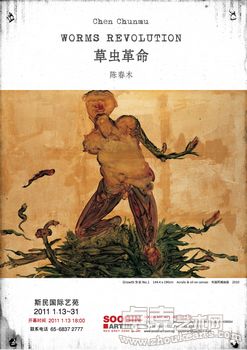
展览时间:2011.1.13--1.31
展览地点:新加坡
主办单位:斯民国际艺苑
Hao 春木的世界:凤凰涅槃,浴火重生
练春海
春木作品传达的意象是模糊的,意义上充满无限的延伸性,通过不同的维度解读,效果完全不同,然而不同的意义之间又环环相扣。他有如一个梦游者,嘴中呓语不断,却含糊其辞。但是如果从他作品风格的纵向发展脉络来看,又万变不离其中,每一件都执拗地裹挟着亚热带海洋性气候的潮湿,以及由此而带来的湿滑、神秘、淋漓和错综粘连。在春木创造的世界里,一方面是机体的腐朽、枯败、异化,另一方面则是青霉孢子的疯狂侵蚀和游移,浆果般地大量分泌,一种不为我们所习惯的生长态势。生长的消停与腐蚀的漫漶在春木的内心中不停地纠结和搅拌着,它像一个发酵罐,平静而又势不可挡地发生作用,孕育出春木作品的基本面貌。
死亡、生殖以及与之相关的生命现象构成人类文明史上永恒而又历久弥新的话题,在消积逃避或者积极应对由死亡焦虑所带来的困惑中,出现了几种模式。其一是生殖膜拜,它与种族存续相对应,现代医学科学的发展以及人类生产能力的迅速提高,使它逐步淡出人类文明的视野。另一种是与个体生命相关的死亡焦虑。这种焦虑不仅没有减轻,还因为工业文明的到来和发展,个体的价值被淡化或异化而出现了新的状况。春木的一些作品,表明上看是在刻画荒郊野外、滩涂沟洫或杂草丛中的印象,可以视作对现代文明的逃避,实际上他是用一种近乎生物解剖学的方式把当代文明中所出现的问题充分暴露出来。从单件作品上来看,我们恐怕较难理解这种艺术表现手法的价值,但如果把他所有的作品联系起来看来,就不难发现,春木的思考早已超越了死亡焦虑,而把问题的矛盾指向了更为宏远、深邃的观照中,以致他的作品都蒙上了一层超然物外的纯粹。
概括地讲,春木的艺术世界在抽象地上演一场主题为“凤凰涅槃”的经典剧目。在他所构建的舞台上,悲哀、烦恼、寂寥、衰败、浓血、污秽、陈腐最终都随“凤凰的自焚”[ 在这里不妨把“凤凰的自焚”看作春木思索的焦灼状态。]而化为灰烬,最后呈现在我们眼前的是蜕变与升华,一幕由新鲜、醇美、光华、欢爱交织而成的乐章。这个心路历程最好的体现莫过于他的雕塑作品《脱胎换骨》。这件作品春木断断续续地构思、制作、调整和搁置,反复再三,历数年之久。作品的现状的形成集中概括了春木这些年对于艺术探索所经历的曲折、跌宕与反复。“脱胎换骨”不仅是这件作品的造型语汇所构建的主旨的延拓与蜕变,同时也是艺术作品能够对死亡焦虑起到干涉作用的直接物证。作品的造型特征如《萨莫色雷斯的胜利女神》那般从天而降,或者相反,如印度史诗《罗摩衍那》所载:在熊熊燃起的烈焰中,投入烈火,化为灰烬的凤凰在冉冉升起的火焰中浴火重生。[2 约成书于公元前3世纪至公元2世纪,与《摩诃婆罗多》并列为印度两大史诗。关于凤凰涅槃的版本很多,其中“点火”的情形有凤凰点火自焚的,也有借助更高神灵点火的,但不影响本文的表达。]
而对于具体的作品而言,它们又各自表达了春木不尽相同的切身体验。
其中一部分作品反映了春木的探索状态。如《表皮底下》、《时间的黑洞》等,这些作品通过对单体形象(或几个并无紧密关联的形象并置)精细入微的描写逼迫观者发问,也可以说是,他把画布当作了酿造甘酒的窖池,而它现在就被呈现在观众眼前,他不是把最后的甘醇奉献给观众。在窖池里,飘浮着淡淡的光怪陆离,流淌着浓稠的液体,也有水蛭状物或浮游的软体动物潜行其中,有时其间还若隐若现地兀立山状的物像,它可能源于老子所谓的玄牝之门,但变化万千。而那些单体形象往往被春木的思维手术刀扒开了皮层,但他所做的就到此为止,春木有意把寻找答案的艰涩与快意一并交给了观众,自己却偷偷地躲在一边观察。我们不妨把此举理解为春木有意不去回应观众的期待,而是给他们提供一次沐照自明的机会。他创造了一种以焦灼消解焦虑,以发问解析问题的模式,不乏禅意。
而在另外一些作品中,表达的主题则转向由对死亡焦虑的思索演绎而成的自我救赎。他有些作品命名为《草虫》,这是非常耐人寻味的题目。实际上从他的作品语言特征中我们也确实能够提炼出冬虫夏草的物征,而且他的许多纸本作品吸收了中国古代绣像的造型特点,这种用绣像手法来呈现植物特征的方法是传世刻本《本草纲目》经常援用的。略微泛黄的绣像插页因历史缘故已经成了一种文化符号,这种符号的发端是传说中的“河图洛书”,[ 中国古代文明的发展过程中曾出现过图文并茂的知识传播时期,在那些用来传播知识的文本中,图与文(或书)缺一不可,“河图洛书”就是这种文化现象的历史记忆。]它是中国文明生命力经久不衰的证据,春木的自我救赎在这里不仅仅是针对个人,甚至还是中国以及一切工业或后工业文明发展中所出现的种种流弊。他这方融合多种传统文化符号的药方,对于工业文明所引起的单向度发展,尤其是中国作为发展中国家在这个大背景中不可避免的断裂与混乱更是一剂良方,不仅能起到镇静的作用,还有化腐朽为神奇的疗效。读图时代的到来,使中国文明有机会向“图书”时代回归,回归不是倒退,现代意义的“图”应该有超越文字的价值,一如春木的作品。
当然超然或者忘我也是自我救赎的一种方式,“无我”自然也就不存在“我”的焦虑,表现在春木的作品中就是游戏状态中的忘我投入。在作品《萤火虫》系列,他像一个躲在阴暗中的窥视者,完全忘记了身外的一切,已然达到周公梦蝶的境界。画面中略显怪异与荒诞的环境表明了这是一个主观世界,客观世界实际上在画面中得不到暗示,[ 客观世界不一定都要在绘画作品中得到体现,但通常会有一些线索暗示了它的存在。]他处在自我的想象之中。他把自己掩藏起来,鬼鬼祟祟地行动,时而扮着怪异的样子,时而又怡然自得地远眺,作品中的一切仿佛处在永恒的时空中,这个时空让存在于其中的主体超越了一切焦虑。
当然,空间的经营始终是春木作品整体架构中很重要的一个层面,一方面是它参与作品意义的生成。无论他的空间为作品提供了什么样的背景,比如在《草虫》中,春木暗示了现场可能处于荒郊野外;在《绿色春梦》和《绿光》等作品中,现场可能是海底世界或太古的洪荒空间;在《营火虫》中,背景又转换成他为自己精心营造的梦乡;他的《纸上作品》也大多描绘了微观世界的迷你空间。但这些空间总是充满黏稠的液体或流动的气体,表现了虚幻、混沌的总体特征,因此在更高层面上,春木的空间具有形而上的性质,其作品是他对道的本源所进行不断追问。
另一方面,在春木最近的一批作品中出现了新的动向,即出现了屏风状界隔。[ 在这里屏风相对于分割而言,墙或其它一切用于分割室内空间的家具或其它物作均可视作屏风之属。]屏风在中国传统文化中是一个重要的家具,不仅具有修饰与欣赏的价值,还兼具实用与礼仪器物的功能。在艺术作品中,它既可以分割空间,组织画面,同时还可以标识特定的语境。在中国书画史上,最为著名的应用屏风之作,莫过于传为五代南唐画家顾闳中所作的《韩熙载夜宴图》。当然,春木在这里并不是要在画面上分隔出一个私密的空间,他引入这种界隔旨在探讨“内”与“外”的逻辑关系。实际上,他的作品一直是他的内心世界的外化,这种“内心”之中再区分出“内外”的表现手法实际上是在二维平面上拓展第四、第五重空间。
对于矛盾的处理是春木作品中的又一个亮点,它们包括前文所说到的生死之间的对抗,新近作品中的带屏风状界隔,屏风的应用带来了内与外的矛盾关系,屏风上的二维图像与地面的立体实物的矛盾,还包括二维平面塑造的幻觉空间与突出画面的三维堆塑物(虫形物)等等。但他显然举重若轻,把所有相互对立的关系处理得都恰到好处,不留痕迹。
春木的世界远离喧嚣,内敛而又隐秘。一切虚伪的外衣都被他去除了,只有令人震惊的真相。
Chun Mu’s World: The Phoenix’s Rebirth by Fire
Lian Chunhai
Chun Mu’s works convey fuzzy imageries. Semantically speaking, they are infinitely extensible, such that they allow for readings into different dimensions, which produce totally different effects each while the different meanings remain intimately interlinked. The artist is like a sleepwalker, uttering dream-talk endlessly, but always maintaining ambiguity. Nevertheless, if we were to trace the longitudinal development of his artistic style, we would see that there is a consistent method to the madness. Every piece of work stubbornly bears the humidity of a subtropical marine climate, along which comes the inevitable slipperiness, mystique, dripping wetness and complex adhesions. In the world created by Chun Mu, there is decay, withering and catabolism of organic matter on one hand, and yet something else on the other. By the latter I refer to a sort of dynamics of growth that we are not usually accustomed to - the deranged invasions and migrations of mould spores, copious secretions of berry-like outgrowths. The tranquillity of growth and the blurring effects of corrosion are constantly intertwining and blending together in Chun Mu’s mind, which works somewhat like a fermentation tank. The reactions within are quiet yet unstoppable, out of which the basic outlook of Chun Mu’s art is born.
We should note that death, reproduction and related biological phenomena are timeless, ever-new subjects in the history of human culture. As humankind tries to either escape from or actively confront death anxiety, several patterns have emerged in the resultant confusion. One of them is fertility worship, which is associated with the survival of one’s race, clan or tribe. Thanks to the advent of modern medicine and science, as well as the rapid improvement of human fecundity, this is gradually dropping out of the sphere of human civilisation. Another perennial pattern is personal angst over one’s own mortality. This anxiety has yet to be alleviated today. In fact, it takes new twists and turns as the value of the individual is being attenuated or catabolised with the birth and development of industrial civilisation. While some of Chun Mu’s works may appear to document impressions of wildlands, mud flats and ditches, they can also be seen as escapes from modern civilisation. The artist is actually exposing extensively the problems of contemporary civilisation with an almost anatomical approach. It may be rather difficult for us to appreciate the value of such an artistic approach if we limit our sight to only single pieces. However, when we connect all of Chun Mu’s works together, it is clear that his ruminations have long risen above death anxiety, and led the conflicts inherent therein to be dissolved in a deeper and more far-out vision. This is why his opuses are often covered with a sheen of transcendental purity.
Generally speaking, Chun Mu’s artistic universe is a theatre where the classic drama of the phoenix’s demise is being played out in an abstract mode. In this locus constructed by himself, sadness, worries, solitude, decrepitude, blood, filth and staleness eventually turn into ashes as the phoenix incinerates itself.[ Here, we can think of the phoenix’s self-incineration as an imagery for Chun Mu’s state of burning anxiety when he engages in contemplation. ] What ultimately unfolds before our eyes is metamorphosis or sublimation, a musical movement woven out of freshness, richness, splendour and joyous love. This spiritual alchemy is best embodied in the artist’s sculpture known as Self-remaking. This work spent several years undergoing rounds of sporadic and repeated conceptualising, fashioning, tweaking and being set aside. Its present state is a condensation of the years of turns, undulations and vacillations in Chun Mu’s artistic explorations. Self-remaking represents something more than the extensions and evolutions of ideas as constructed with plastic vocabulary … It is really a piece of direct physical evidence that testifies to how an artwork can influence death anxiety. The opus’ morphological features indicate something that has descended from above, not unlike the Nike of Samothrace. Alternatively, one may also be reminded of what the Indian epic Ramayana speaks of – the phoenix-like Garuda, who rises out of a magnificent conflagration, glorious and new.[ The Ramayana was completed sometime between the 3rd century BC and the 2nd century AD as one of the two great epics of India, the other being the Mahabharata. There are many versions of the phoenix’s demise - the fire at the mythical creature’s death is supposedly set by the bird itself according to some, or by a higher being according to others. Whichever the case may be, the primary discourse of this essay is not affected. ]
As for the other individual works, they each give form to the artist’s varying intimate experiences.
Some of them reflect Chun Mu’s exploratory mode, such as Under the Epidermis and The Black Hole of Time. Through the microscopic detailing of single images (or a handful of juxtaposed but not closely interrelated images), they compel viewers to ask questions. In other words, they are a brewery’s fermentation pits on canvas. They present not the final, pleasant-tasting product to the viewers, but simply themselves, just the way they are. Pale luminescences drift around in these pits, which also contain thick liquids, hidden creatures reminiscent of leeches or floating invertebrates, as well as the occasional phantasms of majestic mountains. Freely morphing with myriad variations, all these may have come forth from what Laozi called the Dark Matrix. As for the stand-alone images, they are often skinned open by Chun Mu’s mental scalpel, after which he simply desists. The artist deliberately lets viewers bear the difficulties and joys of finding answers, while he himself hides secretly nearby to observe. We can think of this as an intentional refusal to meet viewers’ expectations, or an opportunity offered to us by the artist to come, under illumination, to an understanding on our own. Not without a hint of Zen, he has created a modus of dissolving existential angst with burning anxiety, and of analysing issues through raising questions.
In some of Chun Mu’s other works, the theme is more focused on self-redemption as derived from thinking about death anxiety. Interestingly, a number of the artist’s creations are entitled Grass Worms, a reference to cordyceps or the Chinese caterpillar fungus (literally “winter-worm-summer-grass” in Chinese), certain physical characteristics of which can actually be discerned in Chun Mu’s artistic expressions. At the same time, many of his paper-based works also show the stylistic influence of xiuxiang – i.e., exquisitely drawn portraits seen in ancient Chinese books. (Extant block-printed editions of the Ming dynasty Compendium of Materia Medica, for example, commonly contain botanical illustrations in the xiuxiang format.) Slightly yellowed xiuxiang pages have today been transfigured by history into a type of cultural signifier, the forerunners of which were the legendary He Tu (Yellow River Diagram) and Luo Shu (Luo River Document).[ At some point in the historical evolution of ancient Chinese culture, there was a time when knowledge was transmitted via unitary combinations of words and pictures. In these texts of knowledge promulgation, words/writings and pictures were both equally essential. The He Tu and Luo Shu represent residual impressions of this ancient cultural phenomenon. ] Such signifiers are evidence of the undying relevance of ancient Chinese civilisation. Chun Mu’s self-redemption here thus goes beyond the individual; it actually deals, on a higher level, with the problematic ramifications that arise in the development of China and, indeed, of all industrial or post-industrial civilisations in general. His amalgams of traditional cultural signifiers are an efficacious prescription for the one-dimensional developments driven by industrial civilisation, especially the unavoidable fragmentations and chaos that beset China, a developing country, in this broad context. Here, art as medication not only tranquillizes, but has also transformed the outmoded into something altogether amazing. But one thing should be pointed out: while the advent of the age of picture-reading offers Chinese civilisation a chance to return to the epoch of pictures-and-writings, this return is no retrogression. “Pictures” in the modern sense should be valued for their having risen beyond words, just as Chun Mu’s works are.
But, of course, being transcendental or oblivious to oneself is also a way of redeeming oneself. In the “absence” of self, there naturally cannot be any angst centred around the self. This is manifested in Chun Mu’s paintings as total engrossment in a ludic state. In his Fireflies series, the artist is like a peeper hiding in the dark,attaining to the supernal condition of Zhuangzi’s butterfly-dreamer as he forgets everything outside of himself. The somewhat strange and fantastical nature of the depicted milieu here clearly indicates that we are looking at a subjective world, and nowhere on the canvas is objective reality hinted at.[ While the objective world is not always directly depicted in paintings, there are usually clues that hint at its existence.] The artist is situated in his own imagination. He conceals himself and acts sneakily, now taking on a weird look, now gazing afar placidly. Everything in the picture seems to exist in an eternal time-and-space, within which subjects may transcend all anxieties.
Spatial treatment is always an aspect of great importance in Chun Mu’s general architectonics. Notably, it plays a part in the creation of meaning in his works. Regardless of what kind of background he lays for his spaces, from the suggested wilderness of Grass Worms, to the (supposed) undersea or primordial worlds of the likes of Verdant Dream and Green Light, to the elaborate dreamland of Fireflies, to the mostly microscopic realms of Opus on Paper, there is always a suffusion of viscous liquids or flowing gases. This gives rise to a general sense of illusoriness and primal chaos. Thus, at a higher level, Chun Mu’s spaces possess a metaphysical quality, his opuses being an incessant inquiry into the Source, as it were, of the Dao.
On top of that, Chun Mu’s latest creations are also beginning to show a new development – i.e., that of the screen-like partition.[ “Screen” here is a generic term defined by the divisive function. Any wall or piece of furniture (or any other object) that serves to divide indoor space can be regarded as a screen of some sort.] As an important piece of furniture in traditional Chinese culture, the screen not only possesses decorative and aesthetic value, but is also an object of both practical and ritual use. In works of art, they can serve the purposes of spatial division or pictorial organisation, as well as allow viewers to recognise particular contexts. In the history of Chinese traditional calligraphy and painting, the most renowned application of the screen is seen in Han Xizai’s Evening Banquet, purportedly painted by Gu Hongzhong of Southern Tang during the Five Dynasties period. Chun Mu’s intention, however, is not about delimiting a private space on his canvas. His introduction of the partition is for exploring the logical relations between what is “inside” and what is “outside”. The fact that his art has always been, in the first place, the externalisation of his inner world complicates matters. To thus establish an “inside”-vs-“outside” dichotomy in the context of what is essentially from “within” the artist, is actually nothing less than the expansionary unfolding of fourth- and fifth-order space on a two-dimensional plane.
Chun Mu’s treatment of conflicts is yet another brilliant aspect of his art. Conflicts here include the abovementioned struggle between life and death. With the introduction of screen-like partitions in his latest works, conflicts between “inside” and “outside” arise. In a single painting, planar images on the screen stand vis-à-vis physical, three-dimensional objects on the ground; the illusory space created on a two-dimensional surface looms in contrast with the 3D shapes (“worms”) that protrude from the picture; and the list of mutual oppositions goes on. Yet the artist manages to handle such complexities with apparent ease, playing all the opposites against each other in an absolutely apt and natural manner.
All in all, Chun Mu’s world is a reserved realm of secrets, located far away from clamour and commotion. Here, all externalities of falsehood have been removed by the artist, such that only shocking truth remains.
上一篇展览:“布达•佩思”李超雄作品展
下一篇展览:中国抽象艺术九人展
E_mail:zhkarts@vip.163.com 客服电话:18156032908 18155173028 18956011098
版权所有:卓克艺术网 Copyright 2005-2018 zhuoke.cn, All Rights Reserved.
合肥美网文化传播有限公司ICP皖ICP备09018606号-1 皖公网安备 34010402700602号
企业法人营业执照互联网域名注册证书安徽省通信行业暨互联网协会会员单位中国互联网举报中心
客服电话:18156032908 18155173028 18956011098
©2005-2018 zhuoke.cn ICP皖ICP备09018606号-1