
展览频道
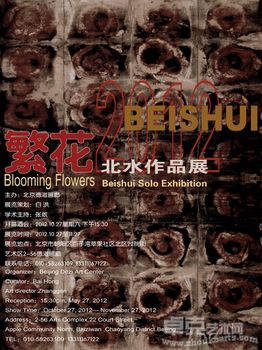
展览主办:北京德滋画廊
展览策划:白 洪
学术主持:张敢开幕酒会:2012.10.27.15:30
展览时间:2012.10.27--11.27
展览地点: 北京市朝阳区百子湾苹果社区北区22院街艺术区2-56
电话:010-58263109 13311167122
E-Mail: baihong163@yeah.net
北水艺术网:http://www.beishui-art.com
Blooming Flowers 2012: Beishui Solo Exhibition
Artist:Beishui
Organizer:Beijing Dezi Art CenterCurator:Bai Hong
Art Direcor: ZhangganReception:15:30pm, May 27, 2012Show Time:October 27, 2012—November 27, 2012Address:2-56 Arts Complex,22 Court Street, Apple Community North, Baiziwan ,Chaoyang District,Beijing.
TEL:010-58263109 13311167122
E-Mail: baihong163@yeah.net
http:// www.beishui-art.com
再谈北水
Talk About Beishui Again
展览介绍:
白洪
2012年10月27日,北水作品将再次在北京德滋画廊展出。这是继2011年5月北京德滋画廊展出北水《中国花园》之后的又一次北水作品展。名为《繁花》。在画廊看来,北水是一个以普通人的角色不停地探究生命、体味生命意义的一个艺术家。他很纯粹。从他的《感受生命》系列开始到《时间的鱼》,从他的《罂粟花开》到今天的《繁花》,无不是如此。
一九九二年末,时年二十四岁的北水只身来到北京。这是中国自上个世纪七十年代改革开放以后,进入到一个实质性发展改革的时期,计划经济体制改革,企业转型,对外开放等等一系列的改革措施,直接影响到中国每一个人的生活,很多人面临着职业、生活乃至整个人生的改变和抉择。生存是很多普通的、特别是底层的广大工人劳动者的一个新的话题。在美术界则是“八五”之后,进入深层次思考和探索的一个阶段。北水在这个时候走出校门,进入社会,开始融入了社会,并通过生活开始了一个艺术家对生命的思考和认识。不久后的一九九四年起始,他创作出了《感受生命》系列作品。这里包括他的《纸钱系列》、《过客》、《鱼非鱼》、《生命之河》、《灵魂远渡》、《往生》《时间的鱼》等等。这个阶段经过了十八年。也是在这个时期,中国改革开放经历了三十年。二零一零年前后,北水的艺术视野进入了一个更大的范围,生命的探索也随之进入了一个更为深入和更高的境界,他开始从对个人内心的体验,转向了对整个社会的认识和社会的发展对人的生命、生存的变化影响,进行了进一步的探究。创作出了《罂粟花开》、《梦寻湿地》、《中国花园》、《欲望花园》及《繁花》等系列作品。
北水的作品有行为、油画、装置、也有版画,他的作品风格一直是比较凝重的,无论是从开始的《感受生命》系列油画,还是现在的《繁花》版画系列,一直都带有着厚重之感,画面很稳,笔触很厚重,坚实。即便是很鲜亮的色彩画面,也还是很稳重的,或说是“古典味”很重。但他又是很现代的,谁也不会觉得他是古典绘画,他只是很好的将古典与现代结合在了一起,恰如其分地变化表现了他的作品所要传达的意义。
北水初来北京,就融入了北京当代艺术的氛围,在“东村”这个当时积聚着很多当今著名的当代艺术家群体在一起,实践着当代艺术,并一直坚持了二十年,在这期间有一些艺术家退出了,选择了不同的道路,北水还在坚守,并且形成了自己独立的看世界的艺术视角和鲜明的艺术风格,当代、独立、探究、批判。他的艺术作品犹如他本人的生活成长经历一样,平实、不浮躁,更求实。他的作品的当代性不同于其他一些当代艺术作品追求表面的形式变化和奇特,也没有在表面上去诉求问题,而是从生命这个大的严肃的、不分等级、不分富有和贫穷、不分人种,每个人必须面对的问题,通过艺术的形式,来述说,引人深思。他的作品和其他一些当代艺术作品相比,他较早地从当代艺术的“表面化”的表现、“表面化”批判中摆脱出来,坚持了艺术美的本身,同时保持了艺术的当代性。在现在很多艺术家的当代艺术都显现出了过分追求“哲学美”的时候,北水的艺术仍然在保持当代性的同时坚持着“艺术美”。这是弥足珍贵的,正因为他坚持了当代艺术的本真,所以他的艺术作品的艺术价值也就不言而喻了。
2012.10.17于太原柳巷寓所
欲望的花儿——致艺术家北水
孙玺祥(《艺周刊》总编)
认识北水源自于他笔下的“鱼”。记得2008年之前,北水的鱼游得到处都是,好像是随便翻开本杂志,就能看到。北水的鱼干涩了、枯萎了,但仍然在顽强地游动,即使仅仅是一根鱼翅,仿佛也在流淌出最后一滴生命的眼泪。其实,鱼我之乐两不相干,鱼非我,我非鱼,但北水的鱼的确是一条情感的鱼,就好像是“逝者如斯夫,不舍昼夜”的水,引发孔夫子对时光流逝的无尽感慨。
鱼在水里,生命在时间里。水无涯,时间无尽,但个体的鱼和生命都是有尽头的,永远都是以有涯对无涯。这不能不让北水生出些许生命意识——人生无常,光阴易逝,落花流水,世态炎凉。鱼的象征意义是不言而喻的,北水从生命的起源开始,追索生命的意义,人生的价值。顺流直下,便有了“生命系列”、“自性无常系列”、“欲望花园系列”,也包括他的“梦寻湿地系列”等作品。代代相循,因因果果,无尽无休,北水的作品既是天问,也是自问;既有对少年情怀的眷恋,也有对人到中年的慨叹。
北水至今不忘1993年深秋,他第一次来北京,背着行李,游走在京都的夜晚,直到天亮才找住的地方。冠盖满京华,斯人独憔悴。一个东北青年的北京艺术之旅,就这样始自那个“凄惶”的夜晚。此前,他的记忆中是明丽的长白山、宁静的天池、花开花落、自性天堂……
北京是成就梦想的地方,也是梦想的粉碎机。搞艺术的人只有搞到北京才肯认赌服输,哪怕是羽毛飞溅、遍体鳞伤,因为即使没有搞出名堂,但毕竟是搞对了地方。北水算是幸运的吧,18年京华烟云,苦过、累过、青春过、荒唐过、失败过、痛苦过、喜悦过、成功过,从一个东北小伙变成了一个小老爷们,疲惫袭来,沧桑掠过,所有的记忆都“刻录”在他的画面上,那是他的心灵日记。令北水欣喜的是有那么多人喜欢并且收藏他的画,其中不乏外国朋友。
尽管北京缺水,然而北水并没有和北京成为多么要好的兄弟,他警惕地和北京为代表的都市文化保持着必要距离,在喧嚣中保持一份静谧和安详,用他那略带惊恐的眼睛观察着周遭世界,用画面表达着内心的不安。那看上去很美的罂粟花,恰恰表达了北水的这种复杂的心态。生命就是过程,人和罂粟花一样,都是人生的过客,也是人生的看客。美到了极致,也就开始走向丑陋。
鱼儿干涸在画布上,“生命远去”,欲望的花儿火辣辣地开……
The Flowers of Desire
To the Artist Bei Shui
By Sun Xixiang
I know Bei Shui because of his Fish series. I remember before 2008, his Fish images were everywhere, it seemed they were in every art magazine. His Fish were dead and dry, but still swimming stubbornly, even the fish’s fin seems to have strong life. The fish is not Bei Shui and Bei Shui is not the fish, but his painting still has emotion. It reminds me of Confucius’ thought about how life and time past quite quickly just as running water.
Fish is in the water, life is in the time and space. Fish and life both have an end. Bei Shui’s ideas of life show on his paintings: uncertain life, flying times, the fickleness of the world. Fish’s symbolic meaning is obvious: Bei Shui search for the meaning and value of life. He has Life Series, Uncertain Life, The Flowers of Desire and Dream Wetland Series. Bei Shui’s work is questioning God and himself. These paintings were memories as a teenager, and thoughts as a middle-age man.
That late autumn of 1993 was remembered by Bei Shui: his first visit to Beijing, with his luggage until morning he found a place to sleep. Tired body in the rich city. A north eastern young artist’s art journey started on a cold night. His past life and memories were filled with beautiful nature: Bright and beautiful Chang Bai Mountain, peaceful Heaven Pool, flowers booming and falling, and nature as heaven…
Beijing is a place for dreams but also crashing your dreams. Artists dream to come to Beijing for art, some have no fears to fail, even failure is better than not coming. Bei Shui was lucky. His eighteen years’ art journey in Beijing was full of experiences: he had bitter life in the past, he was tired sometimes, he was young and did ridiculous things, he failed, he had happiness, he had success, he turned into a mature man from a young guy. The richness of life and memories present on his paintings like his soul’s journal. The pleasant thing is his paintings were loved and collected by many people including foreign friends.
Bei Shui is conscious to keep a distance from the culture of Beijing. He is peaceful and quiet in the noisy city. He watches the world and feels panicked and scared, and he expresses this upset on his paintings. Those Poppy Flowers show his complex attitudes. Life is a journey both to humans and Poppy Flowers, they are passengers and the audience of life. After extremely beautiful moments life can reverse and become ugly.
English translated by Mao Ju, English edited by Forest Bright
英文翻译:毛菊 英文编辑:Forest Bright
审美的无奈:北水的欲望花园
顾振清
守望山野,仰望星空,是来自中国东北长白山山麓的北水自幼养成的一种习性。身处中国社会急剧转型的时代,北水不得不在中国与西方、传统与当代的文化碰撞之中汲取能量,激荡心灵。1990年代初,北水以逾越体制藩篱的自由艺术家身份客居北京东村,从事行为、装置和绘画媒介的实验性创作,由此开启他的艺术独行侠之旅。2000年前后,北水在历经狂热、迷失、逃避、挣扎等各种超负荷的个体生存体验之后,他放下天降之大任,埋头画画,以画画平复自我、放空自我,反思并确认自我的艺术家身份。北水试图通过对绘画性的追溯,折回到艺术的本体论问题之上,追究人的良知、理性精神和终极价值。从庄子之鱼到混沌太初,又从苍茫宇宙回到罂粟摇曳的欲望花园,从具象到形而上,又从形而上回到具象,北水借助中国文化的暗喻符号系统,在画面上往来驰骋,展开自我的精神救赎。其实,他在内心始终未能容纳现代性怪兽,认同红尘万丈的都市生活。他的精神家园仍是来自幼年记忆,来自时而静谧、时而狂野的大自然。但是北水心里也是明镜一块,就社会发展的不可逆性而言,纯粹自然只是一个乌托邦梦想。
守望欲望花园,却源自北水面对的一种观念的困境和审美的无奈。从观念出发,认知事物现象与本质的巨大歧义并不困难。但从现实切入,把握事物在黑与白、虚与实、浅与深之间的双重性,却绝非易事。北水执着于天人合一传统理念和田园牧歌式的回乡情怀,却又不能无视山花烂漫的自然表皮之下现代性社会业已造成的生态灾难。罂粟花是北水在生活现实中选定的一个活标本。它是世界上最美丽的花,生命力极强。它又是恶之花,是毒品和死亡的源头。消费社会背景下,北水以审美的态度直视罂粟之形色、再现罂粟之本性,挑衅的就是现有文化的悖论和道德禁忌的弹性。罂粟花在北水《欲望花园》画面上繁衍、膨胀、变异。它已浑然不是一种象征人类罪孽的符号,而是艺术家谋篇布局的构图元素。在北水构成风格的烘托下,一种自然之花,却以诡异、妖娆形态在画面上绽放。每朵花中心,仿佛都有一个陷阱般的深邃黑洞。这种独特的视觉形象充满暗示,让人不寒而栗,甚至产生一种下意识的莫名惊悸。也许,正是罂粟花诗意绚烂的外表与深刻变异的本质所造就的意义分歧,催生了北水一语双关的表达方式。在《欲望花园》之中,北水渐渐以平易、客观、无我的态度看待现实。他把观自在作为一种境界诉求,在艺术创作的时空状态中体验自由自在的表达、放飞无拘无束的思绪。欲望花园的形象,则在北水不断强化的观念意境中不断衍生、又不断寂灭。通过罂粟花图式的拆解、重组,再拆解、再重组,北水波澜不惊地实施着针对人类环境理想的不断拷问。其实,北水追问的是一个永久的困惑:为何人类对美好世界的不懈追求总不能消解自身的丑陋?
Frustrated Aesthetics: Bei Shui’s Garden of Desire
By Gu Zhenqing
Bei Shui was born from Chang Bai Shan in the northeast of China, he used to live around mountains, with stars in the sky, when he was young he lived in a natural area. Living in the era of rapid transformation in China, Bei Shui got cultural resources and inspiration from both Western and Eastern, traditional and modern. Since the beginning of 1990s, he began his career as a freelance artist lived in Dong Cun village of Beijing. He had performances, installation artworks and made paintings. Around the year 2000, he experienced an overload in his personal survival in a state of enthusiasm – lost – eacaping - and struggling. He made paintings to reflect himself as an artist. Though in his painting works, he searched for something related to humanity and human conscience, rational spirit and the ultimate value of life. His works: we can see, are from fish which belong to Zhuangzi’s theory, then another theory of the vast universe, and then to poppy flowers in the garden. His works evolved from concrete to the metaphysical, and back to concrete. His works are dealing with Chinese cultural elements, to express his interior. In fact, his childhood memories related to the quiet and wild nature influence him still. His heart fights against the modern city and the modern life. Bei Shui’s dream of life is bright, but it is just a utopian dream, the society will continue to develop.
His Garden of Desire was his concept of life and society. He recognized the phenomenon of flowers and society and its essence, and perfectly created works to depict them. Bei Shui’s Chinese traditional concept which was people and nature living harmoniously together. When he created the poppy flowers, he was also thinking about modern society and its ecological disaster. The poppy flowers were just living specimens of the modern society. They are very beautiful and have great vitality. They are metaphor of evil: drugs and death. Underneath our material society, the poppy flowers’ appearance represents the culture and morals of our society and people. Poppy flowers had different states of living: reproductive, expanding and variation. They were not only representing people, but the forms and their compositions are within artist’s intention. The flowers in his work were strange and fascinating. In every flower, there is a black hole in its centre that implied something horrible. Maybe the poppy flowers’ gorgeous look and their drug function were just meanings of Bei Shui’s works. In the Garden of Desire, his attitude towards the reality turned to be objective and quiet. His dreams were expressed in his works. The image of poppy flowers was a result of Bei Shui’s idea and concept. He was questioned the environment for humans. His puzzle was: Why human’s restless pursuit can’t get rid of its ugly sides?
毛菊翻译,Darryl Isaacs 英文校对
Translated by Mao Ju, English edited by Darryl Isaacs
上一篇展览:紫砂繁华梦——吴光荣、许艳春紫砂陶艺展
下一篇展览:面对面----严宁作品展
E_mail:zhkarts@vip.163.com 客服电话:18156032908 18155173028 18956011098
版权所有:卓克艺术网 Copyright 2005-2018 zhuoke.cn, All Rights Reserved.
合肥美网文化传播有限公司ICP皖ICP备09018606号-1 皖公网安备 34010402700602号
企业法人营业执照互联网域名注册证书安徽省通信行业暨互联网协会会员单位中国互联网举报中心
客服电话:18156032908 18155173028 18956011098
©2005-2018 zhuoke.cn ICP皖ICP备09018606号-1


